Showing posts with label John Muir. Show all posts

Saturday, February 24, 2018

Seems doomed

Harlan County, Kentucky

"The great wilds of our country once held to be boundless and inexhaustible are being rapidly invaded and overrun in every direction, and everything destructible in them is being destroyed. How far destruction may go is not easy to guess. Every landscape low and high seems doomed to be trampled and harried."

John Muir


Are we going to save Kentucky?

Tennessee?

The oceans?


Protect


Big South Fork River - Southeastern Kentucky
Everything trampled.  So much trampling.  It seems like the few are doing the trampling at the expense of the many.  For evil to win it is only necessary for good people to stand by.  "Even the sky is not safe from scathe - blurred and blackened..."

John Muir


Thursday, October 29, 2015

What I Saw - Cornwallis, WV


North Bend Rail Trail - WV - Cornwallis to Ellenboro


What we need.  Wilderness is for us.

Everybody needs beauty as well as bread, places to play in and pray in, where nature may heal and give strength to body and soul. 
--John Muir


Monday, July 27, 2015

What direction


Overlook view Park Road east of Big Oak Flat Station, Yosemite NP


"Walk away quietly in any direction and taste the freedom of the mountaineer." 

John Muir

Wednesday, July 15, 2015

The nature of Yosemite

Upper Yosemite Falls
Yosemite Falls has a magical aura to it because of the high place where the water leaps from its rocky channel.  The water in Yosemite Creek comes from snow melt.  In the summer Yosemite Falls is not flowing.

Upper Yosemite Falls is a one of the most beautiful waterfalls in existence. The water shoots out in comets that leap out from the lip of the cliff side.  John Muir and another man lived in a cabin built near the base of Lower Yosemite Falls.

Tuesday, June 9, 2015

What I Saw - The Range of Light

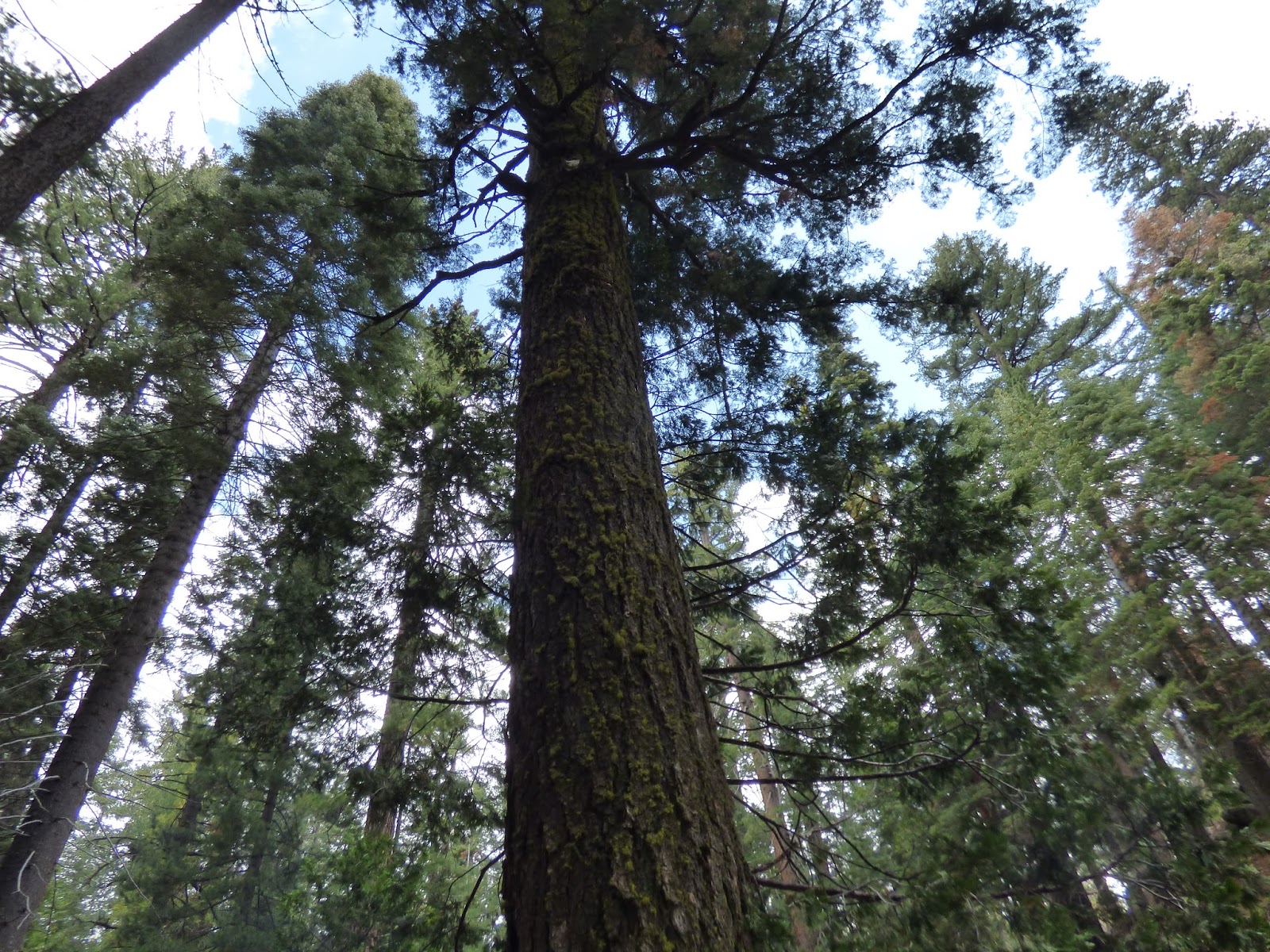
Conifers including Sugar Pines - Yosemite NP - Big Oak Flat Road After and  Near Big Oak Flat Station


From the Sacramento Airport one travels south on I-5.  It is a mistake to exit to I-80.  One must pass the I-80 exit ramp and continue south on I-5. Taking I-80 will take the traveler to Reno. I-80 never meets CA-99, the needed highway to proceed to the Sierra Nevadas. The correct exit is Business I-80.  The naming is confusing for a Sacramento traveler but the correct selection must be made.  Business I-80 is also state route 50.
From Business I-80 one travels to CA-99.  CA-99 takes one to the San Joaquin valley.  There is an illness called San Joaquin Valley Fever that is caused by inhalation of airborne dust or dirt. The causative organism is the fungus Coccidioides immitis. C. immitis resides in the soil.  The valley has many groves. Cherries are grown in the area near Stockton.  This a large cherry producing area.

From  CA-99 one travels to SR 4.  SR 4 goes to Copperopolis.  From Copperopolis one begins to climb into the Sierra Nevada range.  From SR 4 one travels SR 49 to go further east.  The SR 49 bridge over the New Melones Reservoir is a beautiful bridge.   The water levels in the New Molones Reservoir are strikingly lower than past years.

 One may take SR 49 to SR 120.  SR 120 winds its way to the Big Oak Flat entrance station to Yosemite National Park.  Fires have burned parts of the conifers along the alignment of SR 120. The Rim Fire in 2013 burned many trees along SR 120.

The Sierra Nevadas though logged in the national forest areas have in their highlands Yosemite National park.  The park is a World Heritage Site and an International Biosphere Reserve.  As one enters the park one becomes one with the land.  One feels like one is going home.


What I saw - The Range of Light


Yosemite NP - Highway 41- From Tunnel View Overlook


Light...
I know not a singular word fine enough for Light.
Holy beamless, bodiless, inaudible floods of Light.

- John Muir

Tuesday, February 24, 2015

Celebrating the 100th Post

Scenic stream Lake Cumberland SRP, Kentucky
This marks the 100th post available in waterside places.  Today is a day of reflection.  We have learned from Thoreau, Roosevelt, Merton, Berry and Muir.  Merton and Berry lived and wrote in Kentucky; Berry continues to live  and work in Kentucky.  I appreciate the water and the rocks here.  The rocks draw one to approach.

Sunday, December 7, 2014

The people

Trails through the woods are good.  The places we can go to are there because of people's hard work.  Many worked their entire life to keep these natural places from being developed and forever lost.  When we go up to a peak on a trail constructed by the Civilian Conservation Corps (CCC) we benefit from the planning and hard work of those depression era workers.  With every step we take we can call them to mind.

Forest and Boulders - Southeast Kentucky
Climb the mountains and get their good tidings. Nature's peace will flow into you as sunshine flows into trees. The winds will blow their own freshness into you, and the storms their energy, while cares will drop off like autumn leaves. As age comes on, one source of enjoyment after another is closed, but Nature's sources never fail. ... The petty discomforts that beset the awkward guest, the unskilled camper, are quickly forgotten, while all that is precious remains. Fears vanish as soon as one is fairly free in the wilderness."
John Muir

"Life is a great adventure... accept it in such a spirit." Theodore Roosevelt

"If you wish to advance into the infinite, explore the finite in all directions."
Johann Wolfgang Von Goethe 

"Only that day dawns to which we are awake.”
― Henry David Thoreau


Wednesday, September 3, 2014

Near to the heart of the world


Towering Tree Growing in Mammoth Cave National Park
As long as I live, I'll hear waterfalls and birds and winds sing. I'll interpret the rocks, learn the language of flood, storm, and the avalanche. I'll acquaint myself with the glaciers and wild gardens, and get as near the heart of the world as I can. - John Muir

The land of Kentucky was once under the sea as evidenced by fossils present in Kentucky.  Natural Kentucky is filled with the sounds of winds and birds and water.

Beauty in West Kentucky


The Rustic National Park Sign
 
My journey took me to Middle Tennessee and West Kentucky. The Welcome Center on the Southbound side of I-65 in Portland, Tennessee is an inviting building. The windows look like a fort from a bygone era.  There was much rain and dark clouds and I was enjoying my time anyway.

In Franklin, Kentucky there is a store with various old household items. The collection of the previously owned items collected from estates and similar sources is an interesting collection. If anyone wants a group of buttons in a Mason jar they have the jars. No two buttons are the same so if you are looking for five buttons of the same design you are stymied.

One of the largest features in Mammoth Cave National Park is the Green River. If you are exploring the surface you will eventually see the Green River. If you have seen the Cumberland River or the Rockcastle River the Green River will be a disappointment. The Green River looks thick with silt in the water. The look is not an appealing look.

Turn a corner on one of the trails in Mammoth Cave National Park and you will see a tree that is so tall you can scarcely tilt your head up enough to see the crown. Some of Kentucky's tallest trees are found in this beautiful park.

Though the Mammoth Cave area is hilly there is nothing that could be thought of as mountains. Though going there is not going to the mountains going there is going to a wild profusion of living plants.

When John Muir was 13 he lived in rural Wisconsin. He went from an obscure farm life to become an explorer, an essayist and one of America's best read writers. The following passage from John Muir fits this special Kentucky place.

"Thousands of tired, nerve-shaken, over-civilized people are beginning to find out that going to the mountains is going home; that wildness is a necessity; and that mountain parks and reservations are useful not only as fountains of timber and irrigating rivers, but as fountains of life."

Trees Gone

Cut Trees - Kentucky Road Southbound

Trees in Kentucky of more than one meter diameter should be considered special natural resources and kept from harm.  Ronald Jones writes this in Plant Life of Kentucky and explains the importance of protecting these mature trees to our environment.   The trees harvested and placed on this truck are large and some of them may exceed the diameter standard. 

John Muir wrote, "Any fool can destroy trees. They cannot run away; and if they could, they would still be destroyed -- chased and hunted down as long as fun or a dollar could be got out of their bark hides, branching horns, or magnificent bole backbones..."

Tuesday, June 24, 2014

The Weeks Act and the Eastern Forests


Daniel Boone National Forest - Redbird Unit

The forests and parks we have now came after struggles.  The Congress and authors and prominent citizens debated the idea of setting aside land for protection of water resources and the enjoyment of the people.  John Muir and Giford Pinchot were a part of it.  The Weeks Act was a watershed event in this land's history.  Were it not for the Weeks Act there would be no Daniel Boone National Forest, Nantahala National Forest or Cherokee National Forest. John Muir said the struggle would go on.  What needs to be done in our time?

This image is from the Redbird area of the Daniel Boone National Forest where there are large American Beech trees.  The land that became the Daniel Boone National Forest was once bare of trees over wide areas of the landscape.  Like most of the places that became the eastern national forests the land was bare of trees and blackened from fires.

But in the these tracts of land with hills and valleys were old growth trees.  These stately trees survived the ax through the wide lumbering times before the Weeks Act.  When the Forest Service amnounces timber sales sometimes the sale areas include the locations of these old growth trees.  Sadly our woods become the poorer for the loss of these old growth denizens.


Friday, May 30, 2014

Gardens not kept by human hands


"Walk away quietly in any direction and taste the freedom of the mountaineer. Camp out among the grass and gentians of glacier meadows, in craggy garden nooks full of Nature's darlings. Climb the mountains and get their good tidings. Nature's peace will flow into you as sunshine flows into trees. The winds will blow their own freshness into you, and the storms their energy, while cares will drop off like autumn leaves. As age comes on, one source of enjoyment after another is closed, but Nature's sources never fail. ... The petty discomforts that beset the awkward guest, the unskilled camper, are quickly forgotten, while all that is precious remains. Fears vanish as soon as one is fairly free in the wilderness."

John Muir

This picture is from Cahokia in Illinois.

May Nature's peace fill you so that you experience it in you.